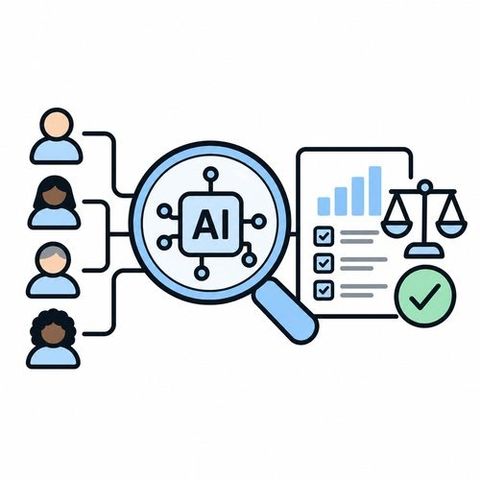
AI is already scanning models for statistical disparities, generating fairness reports, and running bias detection tests. Here's what that means for your career and what to do about it.
AI won't replace AI Bias Auditors, but it's automating the mechanical parts of the audit. Regulatory frameworks like the EU AI Act are driving demand faster than AI can automate the judgment work. Ethical reasoning, stakeholder negotiation, and accountability remain irreplaceable.
TASK LEVEL RISK
Most of the work stays human. AI assists at the edges.
AI is handling specific tasks. The core role is intact but shifting.
AI is automating significant portions of the work. Adaptation is essential.
 Higher risk
Statistical disparity testing, fairness metric calculation, dataset demographic analysis, boilerplate report drafting, model performance benchmarking
Lower risk
Interpreting harm in context, stakeholder interviews, regulatory testimony, defining fairness criteria, negotiating remediation plans, ethical framework design
Bias auditing requires ethical judgment, legal accountability, and stakeholder trust that AI systems cannot provide when auditing other AI systems.
WHAT YOU SHOULD DO
Skills to build for the AI era
New skills - Adapt to the AI landscape
 New skills - Adapt to the AI landscape
Working command of Fairlearn, AIF360, and What-If Tool to measure disparities and evaluate mitigation techniques.
Designing adversarial prompts and structured evaluations to surface bias, stereotyping, and unsafe behavior in generative models.
Deep knowledge of the EU AI Act, NIST AI RMF, and emerging state laws governing algorithmic accountability and disclosure.
Structuring formal reviews that document risks, affected populations, and mitigation plans before AI systems reach deployment.
Timeless skills - What AI can't replicate
 Timeless skills - What AI can't replicate
Applying philosophical frameworks to real trade-offs between accuracy, fairness definitions, and competing stakeholder interests in contested decisions.
Building trust with affected communities to surface harms that never appear in datasets or automated metrics.
Producing audit reports clear enough for lawyers, executives, and regulators to act on with confidence.
THE FULL PICTURE
What AI can do, what it can't, and where the career is headed
What AI can already do
- Run statistical parity and equalized odds tests
- Generate demographic performance breakdowns across model outputs
- Detect proxy variables correlated with protected attributes
- Draft standard sections of compliance documentation
- Monitor deployed models for drift and disparate impact
- Compare model behavior across benchmark fairness datasets
What AI can't do
- AI cannot decide which fairness definition is appropriate for a specific social context.
- AI cannot be legally accountable when a biased system harms real people.
- AI cannot conduct trust-based interviews with affected communities to surface unmeasured harms.
- AI cannot negotiate remediation trade-offs with executives, legal teams, and regulators.
- These are the core contributions of AI Bias Auditors, and they remain entirely human.
AI Bias Auditors will become one of the fastest-growing accountability roles as regulation catches up with deployed AI systems.
Do you have the right strengths for this career?
Our test measures your personality and strengths — and shows how you match with 1600+ careers.
Job outlook
The BLS projects information security and related analyst roles, which include AI auditing specializations, will grow 33% from 2024 to 2034, much faster than average. Demand is strongest in finance, healthcare, and government where regulatory scrutiny is highest. Auditors combining legal literacy with technical ML expertise have the strongest prospects.