
What is an Avant-Garde Composer?
An avant-garde composer explores new ideas in music and isn’t afraid to break the usual rules. Instead of sticking to familiar melodies or rhythms, they experiment with unusual sounds, new technology, or different ways of performing. They’re often asking “what else could music be?” and creating pieces that feel surprising, thought-provoking, or even a bit unconventional.
Most avant-garde composers work in more niche spaces like experimental arts groups, universities, or contemporary music ensembles. They often collaborate with artists in other fields, like visual art or dance, to create experiences that go beyond just listening. Their work might be performed in small theaters, galleries, or unique outdoor spaces. To do well in this area, it helps to be curious, open to trying new things, and comfortable creating work that not everyone will immediately understand or agree with.
What does an Avant-Garde Composer do?
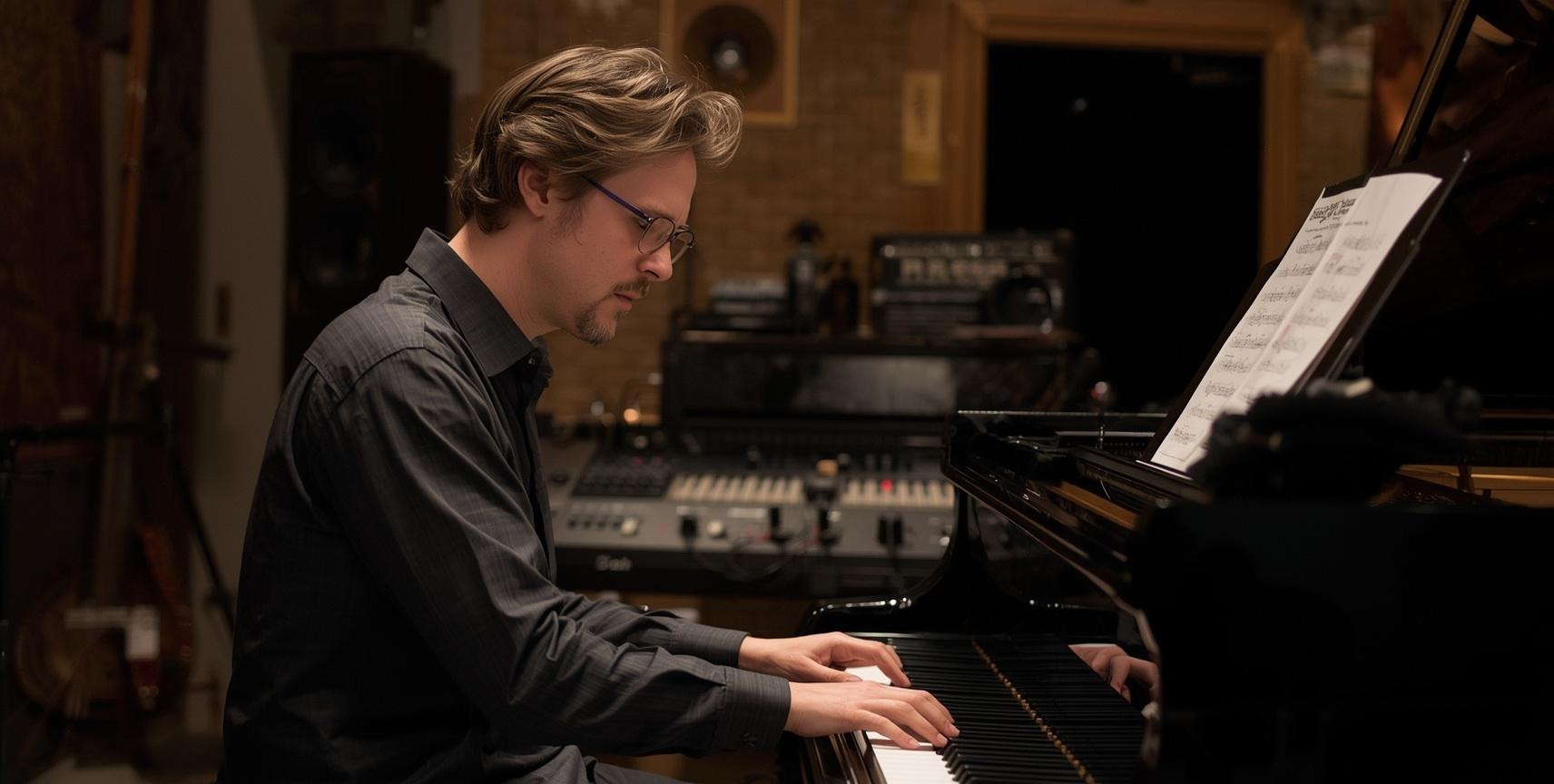
Duties and Responsibilities
Avant-garde composers spend their time investigating sound as a raw material, often creating complex systems or ‘rules’ for how a piece should be performed. Their duties and responsibilities include:
- Experimental Notation: They often develop ‘graphic scores’ or text-based instructions instead of traditional staff notation. These visual maps guide performers through abstract musical landscapes that standard notes cannot represent.
- Sound Design and Synthesis: They spend hours in digital or analog studios crafting unique textures using granular synthesis, field recordings, or modified instruments. This process is about discovering "new colors" in the sonic palette that have never been heard before.
- Algorithmic Composition: They may write computer code or use specialized software to generate musical patterns based on mathematical or environmental data. This allows the composer to create music that evolves on its own, sometimes without direct human intervention.
- Instrument Modification: They often use ‘prepared’ instruments—like putting bolts and rubber between piano strings—to change the fundamental sound of an object. This task requires a mix of musical knowledge and mechanical experimentation.
- Performance Direction: They lead rehearsals that are more like workshops, teaching musicians how to interact with technology or execute extended techniques like ‘multiphonics.’ Clear communication is vital when asking performers to step far outside their comfort zones.
- Grant and Proposal Writing: Because their work is rarely commercial, they spend significant time applying for funding from arts councils and private foundations. This involves detailing the artistic philosophy and technical requirements of their upcoming projects.
Types of Avant-Garde Composers
The avant-garde is a broad umbrella covering everything from silence to extreme noise. Here are some specializations:
- Electroacoustic Composer: These creators blend acoustic instruments with live electronic processing. Their work focuses on the dialogue between human performance and digital transformation in real-time.
- Minimalist Composer: These writers focus on extreme repetition and slow, gradual changes in sound. Their pieces often aim to alter the listener’s sense of time and space through hypnotic, pulse-driven structures.
- Spectralist Composer: These composers use the physics of sound—the harmonic spectrum—as the basis for their music. They focus on how sound waves interact, creating shimmering, ethereal textures that mimic natural acoustic phenomena.
- Sound Artist: Often straddling the line between music and fine art, these individuals create "sound installations" for galleries. Their work is often focused on how sound interacts with a specific physical space or architecture.
- Noise Artist: These composers explore the musicality of ‘harsh’ sounds and feedback. They challenge listeners to find beauty and rhythm in industrial textures, static, and high-intensity sonic walls.
- Conceptual Composer: For these artists, the idea behind the piece is more important than the actual sound. The music might be a set of instructions for the audience to follow or a piece that can only be performed under specific, impossible conditions.
Avant-Garde composers have distinct personalities. Think you might match up? Take the free career test to find out if avant-garde composer is one of your top career matches. Take the free test now Learn more about the career test
What is the workplace of an Avant-Garde Composer like?
The workplace of an avant-garde composer can look very different from a traditional music setting. A lot of their time is spent working alone in a studio, usually with a computer, recording equipment, and sometimes instruments like synthesizers. This is where they experiment with sounds, sometimes spending hours shaping even a small detail. They might also head outside to record everyday sounds, like traffic or nature, and use those in their music.
When it’s time to present their work, the setting changes quite a bit. Instead of a typical concert hall, performances might happen in art galleries, small theaters, or unusual spaces like warehouses. These setups can take time and effort, with speakers, cables, and other equipment needing to be arranged just right. It’s often hands-on and a bit technical, but also creative and flexible.
Working with others is also a big part of the job. Avant-garde composers often collaborate with people in different fields, like visual artists, designers, or even tech specialists. They might meet in shared creative spaces or at universities, working together to bring new ideas to life. It’s a mix of quiet solo work, teamwork, and live performance, all centered around trying new things and exploring what music can be.
Avant-Garde Composers are also known as:
Contemporary Composer
Experimental Composer
Modernist Composer
Nontraditional Composer