
What is a Concert Promoter?
A concert promoter helps bring live music events to life by connecting artists with audiences. The role involves turning an idea for a show into a real event by organizing all the details that make it happen. This can include choosing which artists perform, deciding on the venue and date, and finding ways to attract a crowd. Their work plays an important role in the music scene by creating opportunities for artists and giving people a chance to enjoy live performances.
This career is part of the music and entertainment industry, including live event companies, venues, festivals, and touring groups. Work often takes place in offices, venues, or event spaces, with time spent on-site during shows to make sure everything runs smoothly. This path suits someone who is organized, communicates well, and enjoys planning events. Basic knowledge of marketing, budgeting, and the live music industry is helpful, along with the ability to stay calm under pressure and handle last-minute changes.
What does a Concert Promoter do?
Duties and Responsibilities
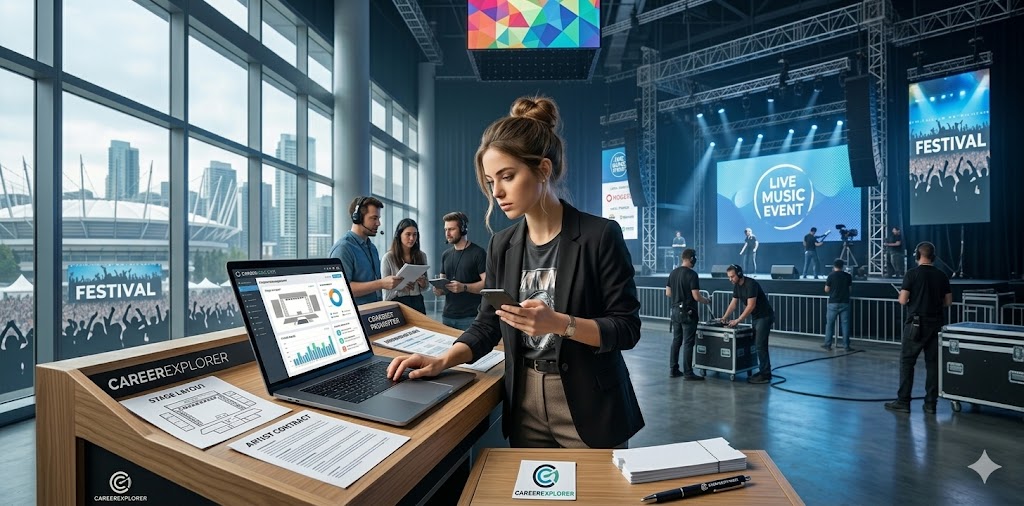
A concert promoter manages the planning, coordination, and execution of live music events, handling both creative and business tasks to bring a show to life.
- Event Planning: Selecting artists, venues, and dates for upcoming shows. This involves researching audience demand and working with booking agents to build a strong event lineup.
- Budgeting and Finance: Creating and managing event budgets, including tracking expenses and setting ticket prices. Financial planning helps ensure the event stays profitable and on track.
- Marketing and Promotion: Developing campaigns to attract audiences through social media, email marketing, and ticketing platforms. Partnerships with media outlets can also help increase visibility.
- Contract Negotiation: Negotiating agreements with artists, venues, and vendors. These contracts outline payment terms, technical needs, and legal requirements with clear deadlines.
- Event Coordination: Working closely with venue staff, sound technicians, and security teams to prepare for the event. This helps ensure all logistics run smoothly on show day.
- On-Site Management: Overseeing operations during the event and handling any last-minute issues. Managing schedules and problem-solving helps keep everything running as planned.
- Industry Awareness: Staying updated on music trends and audience preferences. This may involve attending events, following industry sources, and learning new tools or strategies.
Types of Concert Promoters
Concert promoters can specialize in different areas depending on the type of events they organize and the audiences they serve.
- Independent Promoter: An independent promoter works on a freelance or small business basis to organize local or regional shows. They often focuses on building relationships with emerging artists and smaller venues.
- Venue Promoter: A venue promoter is employed by or closely tied to a specific concert venue. This role focuses on booking acts that fit the venue’s brand and maintaining a consistent event schedule.
- Festival Promoter: A festival promoter organizes large scale, multi day music events featuring many artists. They focus on complex logistics, sponsorships, and attracting large audiences.
- Touring Promoter: A touring promoter manages concerts across multiple cities for a specific artist or tour. This role focuses on coordinating schedules, travel logistics, and consistent promotion across different markets.
- Corporate Promoter: A corporate promoter works for large entertainment companies such as Live Nation or AEG Presents. They often handles major events and tours with larger budgets and access to extensive industry networks.
- Niche Genre Promoter: A niche genre promoter specializes in a specific style of music such as jazz, electronic, or hip hop. This role focuses on understanding a targeted audience and building a strong community around that genre.
Concert promoters have distinct personalities. Think you might match up? Take the free career test to find out if concert promoter is one of your top career matches. Take the free test now Learn more about the career test
What is the workplace of a Concert Promoter like?
Concert promoters often split their time between an office and live event spaces. Their offices may be part of a venue, a production company, or a larger entertainment firm. Outside the office, work takes place in concert halls, clubs, outdoor festival grounds, and arenas, where events are set up and managed.
Some parts of the job can be done remotely, especially during the planning stage. Promoters often use email, video calls, and messaging platforms to stay in touch with teams and partners. They rely on tools such as ticketing platforms like Ticketmaster, budgeting software, and social media scheduling tools to manage promotions and track sales. Even with flexible work options, being on site is important when events are close or underway.
Daily work includes a mix of planning, communication, and problem solving. A concert promoter may spend part of the day confirming details with a venue, then switch to coordinating with marketing teams or reviewing ticket sales. The job involves working with many people, including artists, sound crews, security staff, and sponsors. The pace can change quickly, especially on event days, and the environment is often busy, social, and focused on keeping everything running smoothly.
Concert Promoters are also known as:
Show Promoter