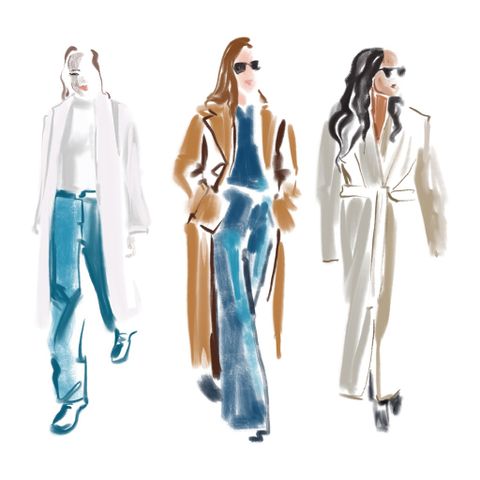
AI is already generating fashion sketches, rendering fabric textures, and producing lookbook visuals in seconds. Here's what that means for your career and what to do about it.
AI won't replace fashion illustrators, but it's already replacing some of the work illustrators do. Studios now use Midjourney and Stable Diffusion for concept boards that once took days. Distinctive style, art direction, and hand-drawn craft remain irreplaceable.
TASK LEVEL RISK
Most of the work stays human. AI assists at the edges.
AI is handling specific tasks. The core role is intact but shifting.
AI is automating significant portions of the work. Adaptation is essential.
 Higher risk
generic croquis sketches, fabric texture rendering, mood board generation, background fills, color variations, quick concept thumbnails
Lower risk
developing signature style, runway live sketching, editorial art direction, client collaboration, brand storytelling, physical media work
Fashion illustration depends on personal artistic voice, cultural intuition, and collaborative dialogue with designers that generative models cannot authentically replicate.
WHAT YOU SHOULD DO
Skills to build for the AI era
New skills - Adapt to the AI landscape
 New skills - Adapt to the AI landscape
Direct tools like Midjourney and Stable Diffusion with precise prompts to explore concepts while maintaining your artistic vision.
Train LoRA models on your own illustrations to generate variations in your signature style for scaled commercial work.
Use Clo3D or Browzwear to render digital garments that pair with illustration for virtual fashion and metaverse projects.
Build Instagram and TikTok presence showcasing process work, since visibility now drives commissions more than agency representation.
Timeless skills - What AI can't replicate
 Timeless skills - What AI can't replicate
Command of anatomy, proportion, and gesture drawn from live observation gives illustrations an authenticity that AI outputs cannot match.
A recognizable personal style rooted in cultural perspective and years of practice is what luxury clients ultimately commission.
Interpreting designer intent through fittings, mood conversations, and revisions requires empathy and studio fluency AI cannot provide.
THE FULL PICTURE
What AI can do, what it can't, and where the career is headed
What AI can already do
- Generate hundreds of pose and silhouette variations quickly
- Render fabric drapes, prints, and textures from reference images
- Produce mood boards and inspiration collages from prompts
- Colorize line drawings and adjust palettes instantly
- Mock up flat technical drawings from rough sketches
- Upscale and clean up scanned hand illustrations
What AI can't do
- AI cannot develop a truly original artistic voice tied to lived cultural experience.
- AI cannot sit backstage at a runway show and capture fleeting movement with intention.
- AI cannot interpret a designer's verbal vision through iterative studio dialogue.
- AI cannot build the personal client relationships that lead to editorial and luxury commissions.
- These are the irreplaceable contributions of Fashion Illustrators, and they remain entirely human.
Fashion illustrators who cultivate a distinctive personal style and learn to direct AI tools will thrive as trusted creative voices.
Do you have the right strengths for this career?
Our test measures your personality and strengths — and shows how you match with 1600+ careers.
Job outlook
The BLS projects employment of fine artists, including illustrators, to grow about 3 percent from 2024 to 2034, slower than average. Demand is strongest in luxury fashion houses, editorial publishing, and digital brand content. Illustrators with distinctive styles and hybrid digital-traditional skills have the best prospects.