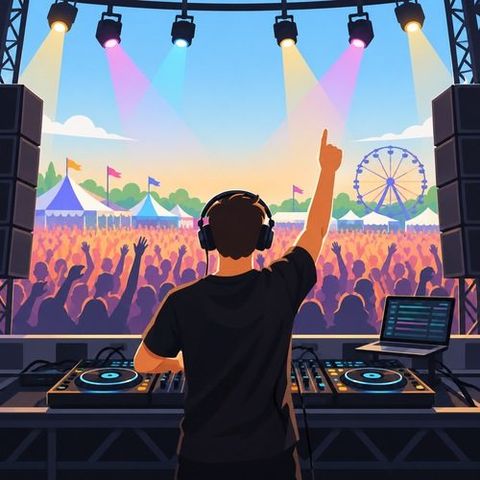
AI is already generating mixes, matching beats, and suggesting track transitions. Here's what that means for your career and what to do about it.
AI won't replace festival DJs, but it's already replacing some of the prep work DJs do. Automated mixing tools now handle bedroom sets and background streams, pushing festival DJs to compete on presence, curation, and crowd reading. Stagecraft, taste, and connection remain irreplaceable.
TASK LEVEL RISK
Most of the work stays human. AI assists at the edges.
AI is handling specific tasks. The core role is intact but shifting.
AI is automating significant portions of the work. Adaptation is essential.
 Higher risk
beatmatching, tempo detection, key analysis, playlist generation, background streaming sets, basic transitions, track tagging
Lower risk
reading a live crowd, stage performance, festival branding, artist collaborations, exclusive edits, headline curation, building fan communities
Festival DJing depends on reading crowd energy in real time, physical stage presence, and cultural taste that AI cannot authentically replicate.
WHAT YOU SHOULD DO
Skills to build for the AI era
New skills - Adapt to the AI landscape
 New skills - Adapt to the AI landscape
Using tools like Suno, Splice AI, and iZotope to speed up edits, stem separation, and custom mashups.
Coordinating generative visuals, lighting, and stage design using tools like TouchDesigner and Resolume for cohesive festival shows.
Growing direct fan channels through Discord, Patreon, and short-form video to sustain bookings and merchandise revenue streams.
Using platform analytics and Shazam data to identify rising tracks and tailor sets to regional crowd preferences.
Timeless skills - What AI can't replicate
 Timeless skills - What AI can't replicate
Sensing energy shifts in real time and adjusting tempo, genre, and drops to sustain peak moments across long sets.
Commanding attention through movement, timing, and physical performance that transforms a set into a shared collective experience.
Curating rare tracks, edits, and transitions that reflect a distinct artistic voice audiences cannot get elsewhere.
THE FULL PICTURE
What AI can do, what it can't, and where the career is headed
What AI can already do
- Analyze BPM and key across large music libraries instantly
- Generate seamless beatmatched transitions between tracks
- Recommend track sequences based on genre and energy
- Create background ambient or lounge mixes automatically
- Separate stems for on-the-fly remixing
- Tag and organize thousands of tracks by mood
What AI can't do
- AI cannot read the shifting energy of a 20,000-person crowd and respond in real time.
- AI cannot build the personal brand and stage persona that headline slots demand.
- AI cannot forge relationships with promoters, labels, and fellow artists that drive bookings.
- AI cannot craft signature edits and unreleased IDs that define a DJ's identity.
- These are the irreplaceable contributions of Festival DJs, and they remain entirely human.
Festival DJs who embrace AI for production and curation while doubling down on presence and identity will thrive through 2030 and beyond.
Do you have the right strengths for this career?
Our test measures your personality and strengths — and shows how you match with 1600+ careers.
Job outlook
The BLS projects employment for musicians and singers, which includes DJs, to grow 2 percent from 2024 to 2034. Demand is strongest in major festival markets, urban nightlife hubs, and touring circuits. DJs with strong social followings, production skills, and genre specializations have the best prospects.