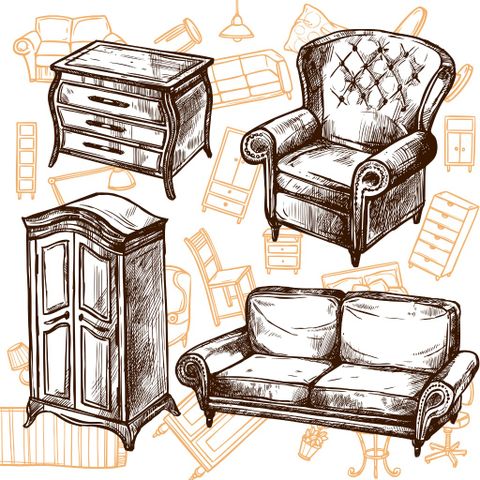
AI is already generating furniture designs, optimizing cut lists, and simulating joinery stress. Here's what that means for your career and what to do about it.
AI won't replace furniture makers, but it's changing how designs get planned and priced. Design software and CNC tools now handle repetitive layout work faster than sketching by hand. Craft, material intuition, and finish quality remain irreplaceable.
TASK LEVEL RISK
Most of the work stays human. AI assists at the edges.
AI is handling specific tasks. The core role is intact but shifting.
AI is automating significant portions of the work. Adaptation is essential.
 Higher risk
generating design concepts, calculating cut lists, drafting shop drawings, estimating material costs, creating client renderings
Lower risk
hand-cut joinery, wood selection, finishing and staining, client consultation, custom fitting, repairing antiques
Furniture making relies on tactile skill, reading wood grain, adjusting joinery by feel, and finishing surfaces that machines cannot replicate consistently.
WHAT YOU SHOULD DO
Skills to build for the AI era
New skills - Adapt to the AI landscape
 New skills - Adapt to the AI landscape
Operate CNC routers using Fusion 360 or VCarve to handle repetitive cuts while reserving hand tools for detail work.
Use Midjourney and generative CAD platforms to rapidly iterate client concepts and produce renderings before committing to lumber.
Build a brand through Instagram, Shopify, and commission platforms since discovery increasingly happens online rather than through galleries.
Track FSC-certified lumber, reclaimed wood, and low-VOC finishes as clients demand transparent, environmentally responsible material choices.
Timeless skills - What AI can't replicate
 Timeless skills - What AI can't replicate
Cut dovetails, mortise-and-tenon, and hand-fitted drawers with chisels and saws that machines still cannot match for fit.
Read grain, moisture, and figure to decide how each board should be cut, oriented, and joined for lasting beauty.
Interpret vague client wishes into finished pieces through listening, sketching together, and building long-term trust across commissions.
THE FULL PICTURE
What AI can do, what it can't, and where the career is headed
What AI can already do
- Generate 3D furniture design variations from prompts
- Optimize cut lists to reduce material waste
- Simulate structural loads on joinery digitally
- Create photorealistic client renderings quickly
- Suggest wood species based on budget and use
- Automate CNC toolpaths for repetitive parts
What AI can't do
- AI cannot read grain direction and adjust cuts to match the wood in front of it.
- AI cannot feel when a joint fits properly or needs paring.
- AI cannot apply hand-rubbed finishes that respond to humidity and light.
- AI cannot build trust with a client over years of commissioned work.
- These are the irreplaceable contributions of Furniture Makers, and they remain entirely human.
Furniture making stays deeply human, with AI handling design iteration and planning while makers focus on craft, materials, and finish.
Do you have the right strengths for this career?
Our test measures your personality and strengths — and shows how you match with 1600+ careers.
Job outlook
The BLS projects employment for woodworkers to grow about 2% between 2024 and 2034, roughly as fast as average. Demand is strongest in custom cabinet shops, restoration workshops, and small-batch studio furniture. Makers who combine CNC skills with traditional joinery have the strongest prospects.