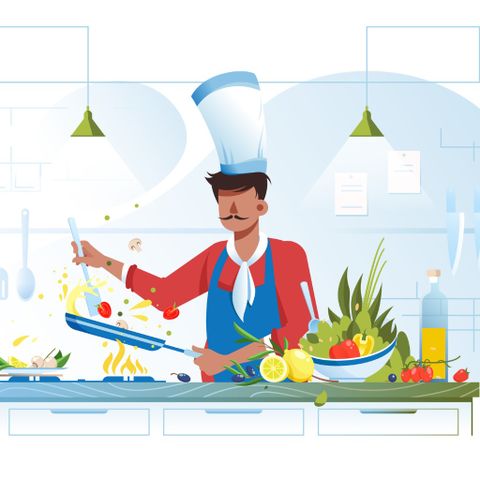
AI is already generating recipes, optimizing inventory, and predicting prep quantities. Here's what that means for your career and what to do about it.
AI won't replace line cooks, but it's already replacing some of the planning work around them. Kitchen management software now handles ordering, portioning, and scheduling that cooks once did manually. Speed, craft, and physical presence at the station remain irreplaceable.
TASK LEVEL RISK
Most of the work stays human. AI assists at the edges.
AI is handling specific tasks. The core role is intact but shifting.
AI is automating significant portions of the work. Adaptation is essential.
 Higher risk
inventory tracking, portion calculations, prep list generation, recipe scaling, waste logging, shift scheduling
Lower risk
grilling proteins to temperature, plating dishes, adjusting seasoning by taste, communicating on a busy line, handling rush service, training new cooks
Line cooking depends on physical dexterity, split-second sensory judgment, and coordinated teamwork under pressure that AI and robotics cannot replicate.
WHAT YOU SHOULD DO
Skills to build for the AI era
New skills - Adapt to the AI landscape
 New skills - Adapt to the AI landscape
Comfort with digital ordering systems, KDS screens, inventory apps, and AI-driven prep tools now standard in modern restaurant kitchens.
Working alongside automated fryers, grill assistants, and robotic prep tools in fast-casual and ghost kitchen environments.
Using sales forecasts and waste data to guide prep volumes, reduce shrinkage, and hit tightening food cost targets.
Executing gluten-free, allergen-safe, vegan, and keto modifications quickly as personalized ordering through apps continues expanding.
Timeless skills - What AI can't replicate
 Timeless skills - What AI can't replicate
Moving multiple tickets through your station simultaneously while keeping every plate hot, correct, and perfectly timed to the pass.
Tasting, smelling, and touching food to judge doneness, seasoning, and quality — skills no machine can replicate.
Calling times, backing up teammates, and reading the rhythm of service through clear callouts and mutual trust.
THE FULL PICTURE
What AI can do, what it can't, and where the career is headed
What AI can already do
- Generate prep lists based on forecasted covers
- Calculate portion costs and recipe yields instantly
- Monitor walk-in temperatures and food safety logs
- Suggest menu adjustments from sales data
- Automate ordering when par levels drop
- Translate recipes across measurement systems
What AI can't do
- AI cannot feel when a steak reaches medium-rare by touch or smell.
- AI cannot move fluidly around a hot line with three cooks in tight space.
- AI cannot taste a sauce and know it needs acid or salt.
- AI cannot read the expediter's energy during a Saturday night rush.
- These are the irreplaceable contributions of Line Cooks, and they remain entirely human.
Line cooks who embrace kitchen technology while sharpening their craft will remain essential to any real restaurant.
Do you have the right strengths for this career?
Our test measures your personality and strengths — and shows how you match with 1600+ careers.
Job outlook
The BLS projects cook employment to grow about 8 percent from 2024 to 2034, faster than average. Demand is strongest in full-service restaurants, hotels, and healthcare facilities. Cooks with fine-dining, high-volume, or specialty cuisine experience have the strongest prospects.