
What is a Music Festival Promoter?
A music festival promoter helps plan, organize, and promote live music events that bring artists and audiences together. The role is about shaping the vision of a festival, booking performers, and creating excitement so people want to attend and enjoy the experience. Music festival promoters play an important part in the live entertainment world by connecting talent with fans and helping events run smoothly, both creatively and financially. Their work also supports local economies and adds to the cultural life of a community.
This career is found in the live entertainment and events industry, including music festivals, concert series, and large public celebrations. It suits someone who enjoys working with people, staying organized, and solving problems as they come up. Strong communication and marketing skills are helpful, along with an interest in music and audience trends. Working with artists, sponsors, and vendors is also a big part of the job, so being comfortable coordinating many moving parts is important.
What does a Music Festival Promoter do?
Duties and Responsibilities
Music festival promoters manage a wide range of tasks to plan, market, and deliver successful live events.
- Event Planning: Developing the overall concept, schedule, and budget for a festival. This includes setting timelines and using event planning tools, spreadsheets, and software to keep everything organized.
- Artist Booking: Researching and securing performers that match the festival’s style and audience. This often involves negotiating contracts, reviewing technical requirements, and working closely with booking agents and artist managers.
- Marketing and Promotion: Creating campaigns to attract attendees and build excitement for the event. Social media, email marketing, ticketing platforms, and digital ads are commonly used to reach target audiences.
- Partnerships and Sponsorships: Working with brands, vendors, and sponsors to support the festival financially and logistically. Responsibilities include preparing proposals and ensuring agreements are fulfilled during the event.
- Logistics Coordination: Organizing site layout, equipment, permits, and safety measures. This involves collaborating with production teams, local authorities, and vendors while following public safety and regulatory requirements.
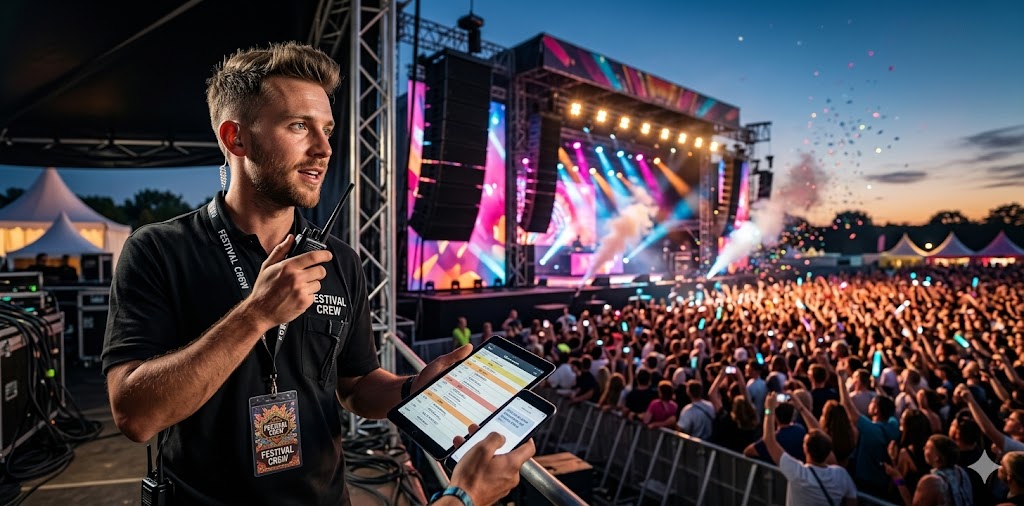
- Onsite Management: Overseeing daily operations during the festival to ensure everything runs smoothly. Real-time problem-solving, staff supervision, and communication tools like radios help keep operations on track.
- Financial Management: Tracking expenses, revenue, and ticket sales to stay within budget. Accounting software and reporting tools are often used to monitor financial performance and deadlines.
- Professional Development: Staying updated on music trends, audience preferences, and event best practices. Industry conferences, reports, and new event technologies help maintain and improve skills.
Types of Music Festival Promoters
Music festival promoters can focus on different areas within the live events industry, depending on the size, style, and goals of the events they produce.
- Independent Promoter: Organizing events without affiliation to a large company. Focus is often on smaller or niche festivals with greater creative control.
- Corporate Promoter: Working within large entertainment companies such as Live Nation. The role typically involves managing large-scale festivals with major budgets and wide audiences.
- Genre-Specific Promoter: Specializing in festivals focused on a particular music style such as jazz, electronic, or country. The goal is building a strong identity and loyal fan base within that genre.
- Community Festival Promoter: Organizing events that highlight local culture and talent. Emphasis is placed on community engagement and partnerships with local organizations.
- Touring Festival Promoter: Managing festivals that move between multiple cities or regions. The focus is on maintaining consistent quality across different locations.
- Digital and Hybrid Event Promoter: Planning festivals that include online or streamed components. This involves blending live and virtual experiences through digital platforms and streaming tools.
Music festival promoters have distinct personalities. Think you might match up? Take the free career test to find out if music festival promoter is one of your top career matches. Take the free test now Learn more about the career test
What is the workplace of a Music Festival Promoter like?
The workplace of a music festival promoter is a mix of office work, event sites, and travel. Much of the planning happens in an office or remote workspace, where schedules are built, budgets are managed, and meetings are held with artists, agents, and sponsors. This part of the job is focused on organizing all the details that make a festival possible.
A big part of the work also takes place at event venues, especially in the weeks leading up to a festival. This can include outdoor festival grounds, stadiums, parks, or large open spaces where stages and equipment are set up. On site, the environment is often busy and fast-moving, with teams coordinating sound, lighting, security, and logistics.
During festival days, the workplace becomes very active and hands-on. The promoter is usually moving between stages, staff areas, and control points to make sure everything runs smoothly and problems are solved quickly. It can be exciting and high-pressure, but also rewarding when the event comes together and the crowd is enjoying the experience.