Is becoming a pop songwriter right for me?
The first step to choosing a career is to make sure you are actually willing to commit to pursuing the career. You don’t want to waste your time doing something you don’t want to do. If you’re new here, you should read about:

Still unsure if becoming a pop songwriter is the right career path? Take the free CareerExplorer career test to find out if this career is right for you. Perhaps you are well-suited to become a pop songwriter or another similar career!
Described by our users as being “shockingly accurate”, you might discover careers you haven’t thought of before.
How to become a Pop Songwriter
Aspiring pop songwriters follow a path of education, skill building, and practical experience to prepare for success in the field. Here are the key steps many professionals take to enter this career:
- Formal Education: While not strictly required, many songwriters pursue a Bachelor’s degree in Songwriting, Music Theory and Composition, or Music. These programs provide a foundation in music theory, composition, and the legal aspects of the industry.
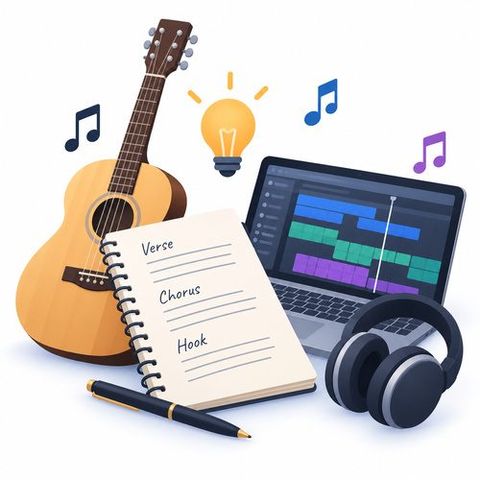
- Develop Musical Proficiency: It is essential to learn at least one "accompanying" instrument, such as guitar or piano, to aid in composition. Being able to play through chord progressions helps you visualize the structure of a song more clearly.
- Master a DAW: Songwriters should become proficient in digital audio workstations like Logic Pro, Ableton Live, or FL Studio. This allows you to create high-quality demos and communicate effectively with producers.
- Build a Portfolio: Create a "catalog" of finished songs that showcase your range across different pop sub-genres. A strong portfolio serves as your resume when pitching to publishers or looking for collaborators.
- Gain Practical Experience: Start by co-writing with local artists or participating in online songwriting communities. This hands-on work helps you learn how to navigate the social dynamics of a writing session.
- Networking and Professional Development: Attend industry conferences like SXSW or join organizations like the Songwriters Guild of America. Building relationships with managers and A&R executives is often how major opportunities are discovered.
- Secure a Publishing Deal: Many songwriters aim to sign with a publisher who can pitch their songs to major artists. This step often requires a proven track record of smaller successes or a very high-quality catalog.
Certifications
While certifications in songwriting are rare, technical and industry-related credentials can help you stand out. Here are some helpful options:
- Avid Certified Professional (Pro Tools): This certification proves you have the technical skills to operate industry-standard recording software. It is highly valued by studios that need writers who can also assist with basic engineering.
- Berklee Online Songwriting Certificates: This program offers specialized training in lyrics and melody from a world-renowned institution. It provides a structured way to sharpen your craft and adds credibility to your professional bio.
- Dante Certification: This is useful for songwriters who work in complex studio environments using networked audio. It shows you understand the technical side of how modern digital studios are connected.
- Copyright Law for Educators and Librarians (Coursera/Universities): Understanding the specifics of Intellectual Property can be a massive asset. This knowledge helps you protect your work and navigate complex royalty structures.
- Apple Certified Pro (Logic Pro): Earning this credential demonstrates your mastery of one of the most popular DAWs for pop production. It signals to collaborators that you are efficient and technically capable.