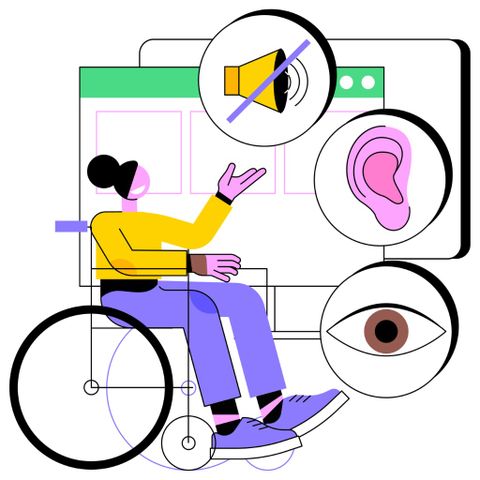
AI is already scanning code for WCAG violations, generating alt text, and suggesting ARIA fixes. Here's what that means for your career and what to do about it.
AI won't replace accessibility developers, but it's already replacing the surface-level audit work many juniors used to do. Automated tools now catch 30-40% of accessibility issues before humans review them. Empathy, lived-experience testing, and legal judgment remain irreplaceable.
TASK LEVEL RISK
Most of the work stays human. AI assists at the edges.
AI is handling specific tasks. The core role is intact but shifting.
AI is automating significant portions of the work. Adaptation is essential.
 Higher risk
automated WCAG scans, color contrast checks, generating draft alt text, basic ARIA labeling, generating accessibility reports, code linting for a11y
Lower risk
usability testing with disabled users, screen reader flow design, remediation strategy, legal compliance decisions, developer training, accessibility advocacy
Accessibility work depends on real user testing with disabled people, nuanced WCAG interpretation, and legal accountability that AI cannot responsibly own.
WHAT YOU SHOULD DO
Skills to build for the AI era
New skills - Adapt to the AI landscape
 New skills - Adapt to the AI landscape
Evaluating outputs from axe DevTools, Lighthouse, and AI scanners to catch false positives and missed contextual accessibility issues.
Designing accessible chatbots, voice UIs, and generative AI outputs that work with assistive technology and diverse cognitive needs.
Understanding upcoming outcome-based WCAG 3.0 guidelines and how they differ from 2.2 conformance testing methodologies.
Crafting prompts that generate accessible code, meaningful alt text, and semantically correct components from GitHub Copilot and similar tools.
Timeless skills - What AI can't replicate
 Timeless skills - What AI can't replicate
Recruiting, facilitating, and interpreting sessions with screen reader, switch, and cognitive disability users to surface real barriers.
Championing accessibility across engineering, design, and executive teams by translating disability experience into business and ethical priorities.
Interpreting ADA, Section 508, EAA, and WCAG requirements in ambiguous real-world contexts where automated tools cannot decide.
THE FULL PICTURE
What AI can do, what it can't, and where the career is headed
What AI can already do
- Scan pages for WCAG 2.2 violations automatically
- Generate draft alt text and ARIA labels
- Detect color contrast and heading structure issues
- Suggest code fixes for common accessibility bugs
- Produce compliance reports and VPATs from scan data
What AI can't do
- Conduct authentic usability testing with screen reader and switch device users.
- Judge whether a complex custom component truly meets WCAG intent.
- Own legal accountability under ADA, EAA, or Section 508 lawsuits.
- Advocate inside organizations to shift culture toward inclusive design.
- These are the core contributions of Web Accessibility Developers, and they remain entirely human.
Web Accessibility Developers who pair AI tooling with disability community expertise will lead the field as regulation and inclusion demands accelerate.
Do you have the right strengths for this career?
Our test measures your personality and strengths — and shows how you match with 1600+ careers.
Job outlook
BLS projects web developer employment to grow 8% from 2024 to 2034, faster than average. Demand is strongest in regulated industries like government, healthcare, finance, and education following the European Accessibility Act and ADA lawsuits. Specialists in mobile a11y, WCAG 2.2, and inclusive design have the best prospects.