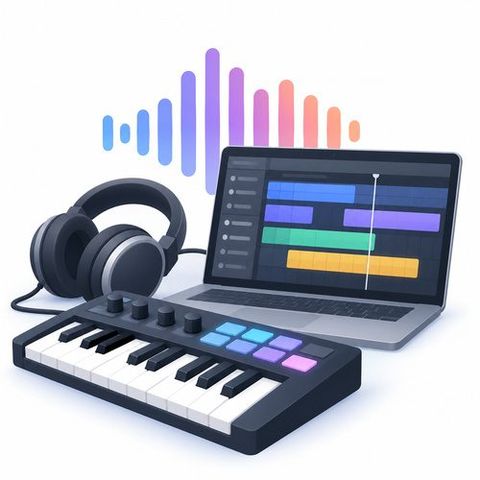
What is an Electronic Music Producer?
An electronic music producer is the primary creator responsible for crafting music using digital tools, synthesizers, and software. Unlike traditional producers who might focus on overseeing a band, electronic producers often build the entire track from scratch—composing the drums, basslines, and synth textures themselves. They act as both the composer and the engineer, blending creative artistry with technical sound design to create everything from underground club tracks to chart-topping pop hits.
Electronic music producers work across a variety of sectors, including the gaming industry, film scoring, and the live music circuit as DJs or performers. They are typically found in home-based "bedroom" studios or high-end commercial facilities equipped with advanced audio monitors and hardware gear. Success in this role requires a "golden ear" for sound quality, deep technical knowledge of audio software, and a persistent drive to experiment with new sounds.
What does an Electronic Music Producer do?
Duties and Responsibilities
Electronic music producers handle the end-to-end creation of a track, moving from the initial sound design to the final polished master. Their duties and responsibilities include:
- Sound Design: They create unique sounds using virtual instruments or hardware synthesizers to give their music a distinct identity. This involves manipulating oscillators, filters, and effects to build textures that haven't been heard before.
- Beat Making: They program complex drum patterns and percussion tracks using samplers or drum machines. This task is crucial for establishing the rhythm and "groove" that defines different electronic genres.
- Arrangement: They organize various musical sections—like the intro, build-up, drop, and outro—to create a cohesive emotional journey. Producers use their DAW’s timeline to ensure the energy of the track flows logically for the listener.
- Mixing: This involves balancing the volume, frequency, and spatial placement of every sound in the track. They use tools like EQ and compression to make sure the music sounds clear and powerful on any speaker system.
- Sample Manipulation: They record or source external sounds and "flip" them into something new through pitch-shifting and time-stretching. This creative recycling is a hallmark of electronic music and requires a sharp sense of timing.
- Collaborative Sessions: Producers often work with vocalists or other musicians to add "human" elements to their digital tracks. They act as directors during these sessions, guiding the performer to get the best take for the song.
Types of Electronic Music Producers
Electronic music is a vast field with many niche areas of expertise. Here are some common specializations:
- EDM Producer: These producers focus on high-energy tracks designed for festivals and large clubs. Their work is characterized by dramatic "drops" and polished, loud production styles.
- Ghost Producer: These individuals create tracks for other DJs or artists who then release the music under their own names. It is a behind-the-scenes role that requires the ability to mimic different signature styles perfectly.
- Sound Designer for Games: These producers create atmospheric music and "SFX" specifically for interactive media. Their work focuses on how music can change based on a player's actions or the environment of a game.
- Techno/House Producer: These specialists focus on repetitive, rhythmic tracks designed for long DJ sets. They prioritize "vibe" and subtle evolution over time rather than traditional song structures.
- Cinematic Electronic Producer: They blend orchestral elements with synthesizers to create scores for movies or trailers. Their focus is on mood, tension, and supporting a visual narrative through sound.
- Mixing and Mastering Engineer: Some producers specialize in the final technical stages of a track's life. They are hired to take someone else’s raw ideas and make them sound professional and commercially competitive.
Electronic music producers have distinct personalities. Think you might match up? Take the free career test to find out if electronic music producer is one of your top career matches. Take the free test now Learn more about the career test
What is the workplace of an Electronic Music Producer like?
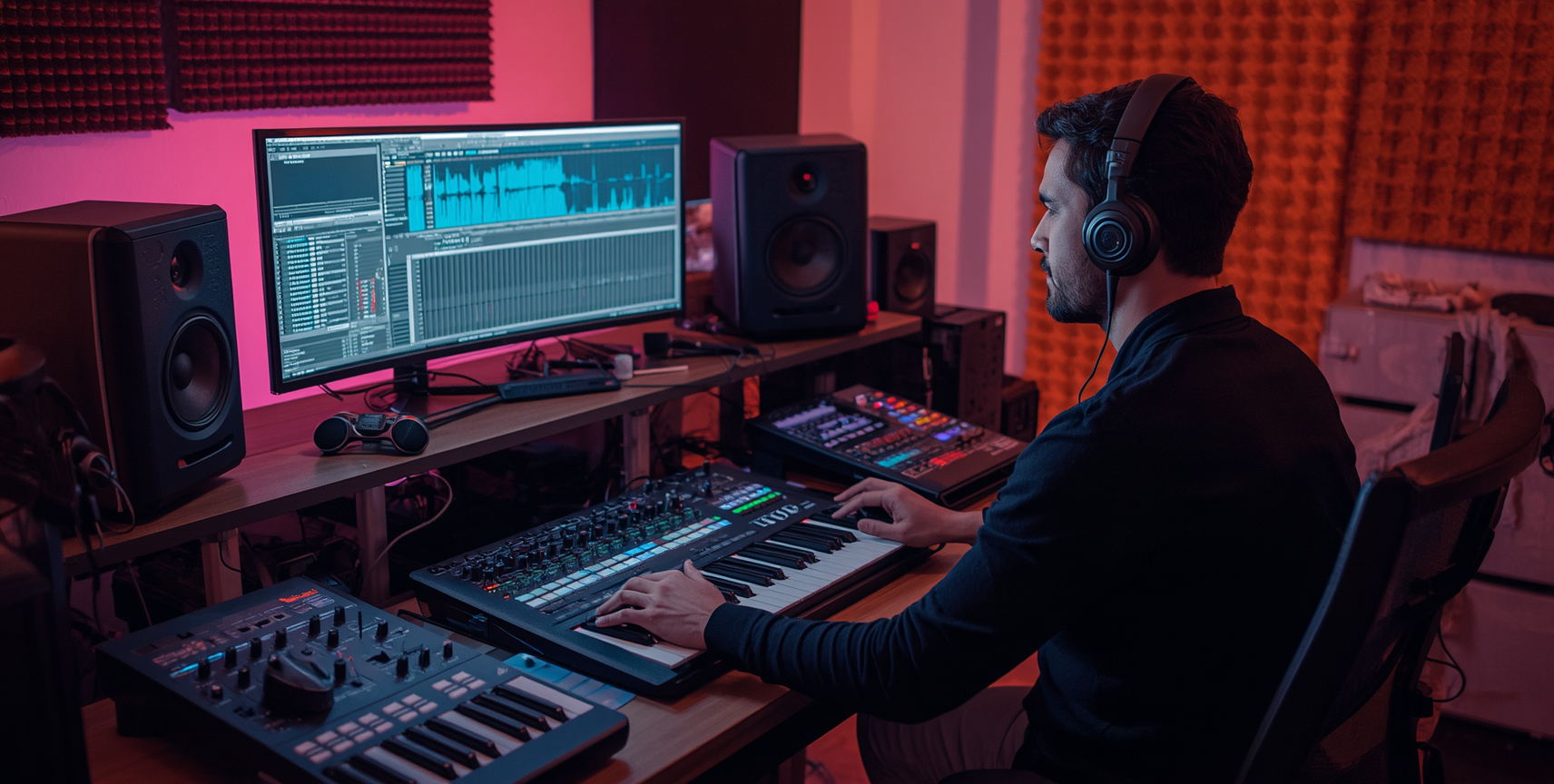
The workplace of an electronic music producer is centered around a "workstation," which can range from a simple laptop and headphones to a room filled with vintage analog gear. For many, the office is a home studio where they spend significant time alone, deep in "the zone" of creative flow. These spaces are often treated with acoustic foam or panels to ensure that the producer can hear their work accurately without room interference.
In a professional studio setting, the environment is more social and technically complex. Producers may work alongside songwriters, engineers, and label executives, using large-scale mixing consoles and high-end outboard gear. The workflow is heavily digital, relying on cloud storage and file-sharing systems like Splice or Dropbox to collaborate with artists who might be on the other side of the world.
Daily life involves a lot of sitting and focused listening, which requires a workspace designed for ergonomics. While the hours can be irregular—often stretching into the early morning when inspiration hits—the atmosphere is generally one of intense, quiet concentration punctuated by bursts of excitement when a track finally "clicks." Whether in a bedroom or a skyscraper studio, the focus is always on the speakers.
Electronic Music Producers are also known as:
EDM Producer
Dance Music Producer