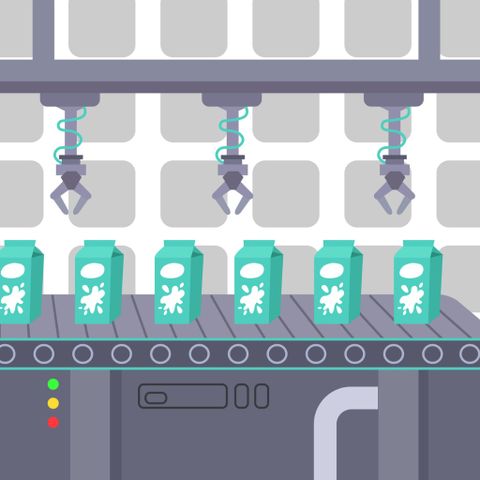
AI is already monitoring ingredient ratios, adjusting cooking parameters, and predicting batch failures. Here's what that means for your career and what to do about it.
AI won't replace food batchmakers, but it's already replacing some of the routine measuring and monitoring work batchmakers do. Automated mixing systems and sensor-driven quality checks now handle tasks that once required constant human oversight. Sensory judgment, food safety accountability, and hands-on adjustment remain irreplaceable.
TASK LEVEL RISK
Most of the work stays human. AI assists at the edges.
AI is handling specific tasks. The core role is intact but shifting.
AI is automating significant portions of the work. Adaptation is essential.
 Higher risk
Measuring ingredients, monitoring cook temperatures, logging batch data, timing production cycles, basic quality checks, inventory tracking
Lower risk
Sensory taste evaluation, troubleshooting equipment issues, adjusting recipes for ingredient variability, ensuring food safety compliance, training new operators
Food batchmaking relies on tactile judgment, sensory evaluation, and real-time troubleshooting of equipment failures that automated systems cannot fully replicate.
WHAT YOU SHOULD DO
Skills to build for the AI era
New skills - Adapt to the AI landscape
 New skills - Adapt to the AI landscape
Learn to oversee automated mixing, cooking, and packaging systems using SCADA dashboards and sensor alerts on the plant floor.
Interpret batch data trends, spot anomalies in AI-generated reports, and adjust production parameters based on real-time analytics.
Earn HACCP, SQF, or FSPCA credentials to manage safety oversight that regulators increasingly require alongside automated compliance systems.
Timeless skills - What AI can't replicate
 Timeless skills - What AI can't replicate
Trained taste, smell, and touch skills catch flavor and texture defects that instruments and AI models still cannot reliably detect.
Diagnosing equipment issues by sound, vibration, and experience keeps production running when sensors and automated diagnostics fall short.
Knowing when to adjust a recipe for ingredient variability or seasonal changes remains a deeply human production skill.
THE FULL PICTURE
What AI can do, what it can't, and where the career is headed
What AI can already do
- Monitor batch temperatures and pH levels in real time
- Adjust ingredient ratios using predictive models
- Detect anomalies in production data automatically
- Generate compliance logs and traceability records
- Optimize recipe scaling for large production runs
What AI can't do
- Taste and evaluate flavor, texture, and mouthfeel with human sensory precision.
- Diagnose why a mixer is behaving strangely by sound and vibration.
- Adjust production on the fly when raw ingredients vary in moisture or quality.
- Take personal accountability for food safety when a batch goes wrong.
- These are the core contributions of Food Batchmakers, and they remain entirely human.
Food batchmakers who embrace automation as a tool while owning sensory quality and safety will remain essential to food production.
Do you have the right strengths for this career?
Our test measures your personality and strengths — and shows how you match with 1600+ careers.
Job outlook
The Bureau of Labor Statistics projects food batchmaker employment will grow about 5 percent from 2024 to 2034. Demand is strongest in specialty food manufacturing, craft beverage production, and prepared meal facilities. Workers skilled in automation oversight and food safety certifications have the best prospects.