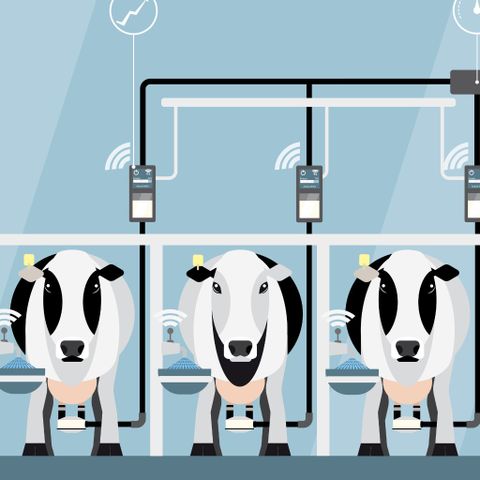
AI is already monitoring cow health, optimizing milking schedules, and detecting mastitis before symptoms appear. Here's what that means for your career and what to do about it.
AI won't replace robotic dairy farmers, but it's already handling much of the routine milking and monitoring work. Farms now run 24/7 automated milking systems with dashboards flagging herd issues in real time. Animal husbandry, mechanical troubleshooting, and land stewardship remain irreplaceable.
TASK LEVEL RISK
Most of the work stays human. AI assists at the edges.
AI is handling specific tasks. The core role is intact but shifting.
AI is automating significant portions of the work. Adaptation is essential.
 Higher risk
milking schedule optimization, feed ration calculations, herd health data logging, yield forecasting, temperature monitoring, cleaning cycle scheduling
Lower risk
calving assistance, hoof trimming, robot repair, veterinary decisions, pasture management, staff supervision, breeding choices, land maintenance
Robotic dairy farming requires physical presence with animals, hands-on equipment repair, and judgment calls no algorithm can make from a screen.
WHAT YOU SHOULD DO
Skills to build for the AI era
New skills - Adapt to the AI landscape
 New skills - Adapt to the AI landscape
Operating and calibrating Lely, DeLaval, or GEA milking robots, troubleshooting sensors, arms, and cleaning cycles daily.
Interpreting dashboards for yield, conductivity, and rumination data to spot health or reproduction issues before they escalate.
Using automated feeders and ration software to match nutrition to each cow's stage, boosting yield and reducing waste.
Working with platforms like SenseHub or CowManager that use machine learning to flag illness, heat, and calving early.
Timeless skills - What AI can't replicate
 Timeless skills - What AI can't replicate
Reading cow behavior and body condition directly, catching problems that sensors miss and building trust with the herd.
Diagnosing and repairing hydraulic, electrical, and vacuum systems under time pressure when robots fail during milking hours.
Managing forage crops, soil fertility, and manure application to keep the farm ecosystem productive and environmentally sustainable.
THE FULL PICTURE
What AI can do, what it can't, and where the career is headed
What AI can already do
- Analyze milk yield and quality data per cow automatically
- Detect early signs of mastitis using conductivity sensors
- Optimize feeding rations based on production and body condition
- Schedule robotic milking cycles for maximum throughput
- Generate herd health reports and reproductive timing alerts
- Monitor barn climate and adjust ventilation systems
What AI can't do
- AI cannot assist a difficult calving or physically restrain a sick cow.
- It cannot repair a hydraulic milking arm at 3 a.m. during a breakdown.
- It cannot judge subtle behavioral changes that signal illness before sensors do.
- It cannot manage pasture rotation, soil health, and neighboring farm relationships.
- These are the irreplaceable contributions of Robotic Dairy Farmers, and they remain entirely human.
Robotic dairy farmers who master both the animals and the algorithms will run the most productive herds of the next decade.
Do you have the right strengths for this career?
Our test measures your personality and strengths — and shows how you match with 1600+ careers.
Job outlook
The BLS projects agricultural manager employment will grow about 1 percent from 2024 to 2034, slower than average. Demand is strongest on mid-sized dairies transitioning to automated systems in the Midwest and Northeast. Farmers skilled in robotics maintenance and herd data analytics have the best prospects.