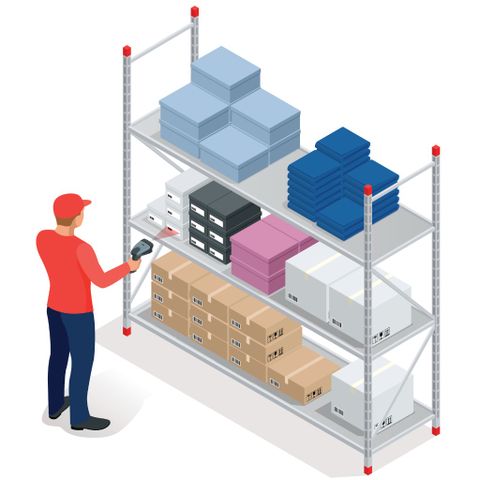
AI is already tracking inventory, predicting stock needs, and directing robotic pickers in warehouses. Here's what that means for your career and what to do about it.
AI won't fully replace stock clerks, but it's already replacing much of the counting, tracking, and reordering work they used to do. Automated systems and warehouse robots now handle high volumes of routine stocking tasks. Physical dexterity, problem-solving, and customer interaction remain irreplaceable.
TASK LEVEL RISK
Most of the work stays human. AI assists at the edges.
AI is handling specific tasks. The core role is intact but shifting.
AI is automating significant portions of the work. Adaptation is essential.
 Higher risk
Manual inventory counts, reorder calculations, barcode scanning, shelf label updates, basic stock rotation tracking, receiving data entry
Lower risk
Handling fragile or irregular items, resolving misplaced stock issues, assisting customers on the floor, damage assessment, cross-team coordination
Stock clerks bring physical adaptability, on-the-spot problem solving, and customer interaction that automated systems and warehouse robots still struggle to match reliably.
WHAT YOU SHOULD DO
Skills to build for the AI era
New skills - Adapt to the AI landscape
 New skills - Adapt to the AI landscape
Fluency in platforms like SAP EWM, Manhattan, or Oracle WMS to track inventory, receiving, and shipping accurately.
Working alongside autonomous mobile robots and picking systems from providers like Locus or Symbotic on the warehouse floor.
Spot-checking AI-generated inventory counts and reorder suggestions to catch errors before they cascade into stockouts or overstock.
Operating handheld and wearable scanners, RFID readers, and voice-pick systems used in modern fulfillment and retail environments.
Timeless skills - What AI can't replicate
 Timeless skills - What AI can't replicate
Adapting when pallets arrive damaged, items are miscategorized, or shelves need reconfiguring for unexpected inventory shifts.
Helping shoppers locate products, answering questions, and representing the store with patience and clear communication.
Consistently showing up, moving heavy inventory safely, and maintaining accuracy across long shifts under changing demand conditions.
THE FULL PICTURE
What AI can do, what it can't, and where the career is headed
What AI can already do
- Predict inventory needs using historical sales data
- Track stock levels across warehouses in real time
- Generate automated reorder requests to suppliers
- Route robotic pickers through optimized paths
- Flag discrepancies between recorded and actual stock
- Process receiving documents and update databases instantly
What AI can't do
- Physically lift, unbox, and shelve irregularly shaped or fragile merchandise.
- Adapt on the fly when a pallet arrives damaged or mislabeled.
- Assist a confused customer trying to find a specific product.
- Coordinate with delivery drivers, managers, and coworkers during unexpected disruptions.
- These are the core contributions of Stock Clerks, and they remain entirely human.
Stock clerks who learn to work alongside automation and warehouse software will remain valuable even as routine tasks disappear.
Do you have the right strengths for this career?
Our test measures your personality and strengths — and shows how you match with 1600+ careers.
Job outlook
The BLS projects stock clerk and order filler employment to decline about 2% from 2024 to 2034 due to warehouse automation. Demand remains steady in grocery, retail, and fulfillment centers. Roles combining stocking with equipment operation or supervisory duties offer the best prospects.