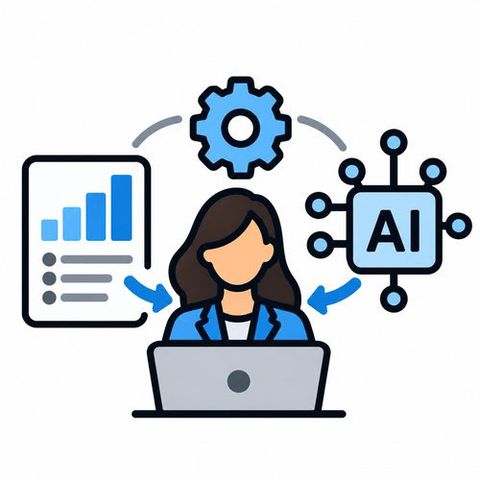
What is an AI Business Analyst?
An AI business analyst serves as the essential bridge between a company’s complex technical capabilities and its high-level strategic goals. They look at a business’s challenges and identify exactly where artificial intelligence or machine learning can step in to solve problems, increase efficiency, or uncover new revenue streams. By translating technical jargon into clear business language, they ensure that data scientists build tools that actually move the needle for the organization, making them a vital part of modern innovation teams.
These professionals work across a wide range of industries, including finance, healthcare, retail, and manufacturing, often based in corporate offices or tech hubs. To succeed in this role, you need a unique blend of sharp analytical thinking, a solid understanding of machine learning concepts, and top-tier communication skills. It is less about writing the code yourself and more about knowing what the code can do, how much it will cost, and how it will ultimately help the business grow.
What does an AI Business Analyst do?

Duties and Responsibilities
AI business analysts manage a dynamic mix of strategic planning, data investigation, and cross-team coordination to ensure AI projects stay on track and deliver real results. Their duties and responsibilities include:
- Requirement Gathering: They meet with stakeholders to identify specific business problems that could be solved using AI technology. This ensures that the technical team isn't just building cool gadgets but is creating tools that address actual company needs.
- Feasibility Analysis: They evaluate whether a proposed AI solution is technically possible and financially worth the investment. This involves conducting cost-benefit analyses and predicting the potential return on investment for new projects.
- Data Exploration: They work with data sets to ensure the information available is high-quality and relevant for training AI models. They often collaborate with data engineers to fix gaps in data collection before a project even begins.
- Model Performance Monitoring: Once an AI tool is live, they track key performance indicators to see if it is meeting its original goals. They provide feedback to the technical teams if a model starts to drift or lose accuracy over time.
- Stakeholder Communication: They present complex technical findings to executives in a way that is easy to understand and act upon. This helps leadership feel confident in making big decisions about the company's technological future.
- Ethical Oversight: They review AI projects to ensure they follow data privacy laws and ethical guidelines regarding bias and fairness. This protects the company from legal risks and ensures the technology treats all users equitably.
Types of AI Business Analysts
AI business analysts can specialize in different areas of technology or business strategy, depending on their interests and the needs of their employer. Here are some specializations:
- Machine Learning Analyst: These specialists focus on projects involving predictive modeling and automated decision-making systems. They spend most of their time helping teams choose the right algorithms to forecast things like customer churn or stock levels.
- Conversational AI Analyst: These professionals work on chatbots, virtual assistants, and voice-recognition technology. Their main goal is to improve how humans interact with machines using natural language processing.
- Computer Vision Analyst: This role focuses on AI that can "see" and interpret visual information from the world. They are often found in industries like manufacturing for quality control or healthcare for analyzing medical imagery.
- Product AI Analyst: These analysts work within product management teams to integrate smart features into existing software. They focus on the user experience and how AI can make a specific app or platform more helpful for the end user.
- AI Strategy Consultant: Often working for third-party firms, these analysts help various companies build a long-term roadmap for AI adoption. They specialize in high-level planning and helping organizations transition into AI-driven workflows.
- Operations AI Analyst: These specialists look inward at a company’s own processes to find ways to automate repetitive tasks. They focus on using AI to streamline things like supply chain logistics or internal HR systems.
AI business analysts have distinct personalities. Think you might match up? Take the free career test to find out if AI business analyst is one of your top career matches. Take the free test now Learn more about the career test
What is the workplace of an AI Business Analyst like?
The workplace of an AI business analyst is usually a collaborative, fast-paced corporate or tech environment. While many are based in modern office buildings equipped with the latest technology, a significant portion of the workforce enjoys the flexibility of remote or hybrid arrangements. Because the job involves a lot of "head-down" data analysis and "heads-up" strategy meetings, these professionals often switch between quiet focus zones and energetic conference rooms.
Digital collaboration is the heartbeat of this role, especially for those working across different time zones. They rely heavily on communication tools like Slack and Microsoft Teams, while using project management platforms like Jira or Azure DevOps to track the progress of AI development cycles. For the analytical side of the job, they spend a lot of time in data visualization software like Tableau or Power BI, turning raw numbers into visual stories that the rest of the company can understand.
Daily life involves a lot of teamwork and constant learning. An AI business analyst might start their morning in a "stand-up" meeting with data scientists and finish their afternoon presenting a slide deck to the CFO. The atmosphere is generally one of problem-solving and curiosity, as the field changes almost every week with new technological breakthroughs. It is an ideal environment for someone who loves to be at the center of innovation while still staying grounded in practical business goals.
Frequently Asked Questions
Artificial Intelligence-Related Careers and Degrees
AI Careers
Technical & Engineering Roles
- AI Agent Developer
- AI Autonomous Systems Engineer
- AI Cloud Engineer
- Artificial Intelligence Engineer
- AI Infrastructure Engineer
- AI Integration Specialist
- AI Performance Engineer
- AI Platform Engineer
- AI Robotics Engineer
- AI Software Engineer
- AI Solutions Engineer
- AI Systems Engineer
- Computer Vision Engineer
- Edge AI Engineer
- Generative AI Engineer
- Machine Learning Engineer
- MLOps Engineer
- Multimodal AI Engineer
- Natural Language Processing (NLP) Engineer
- Synthetic Data Engineer
AI Product & Design Roles
- AI Accessibility Designer
- AI Creative Technologist
- AI Curriculum Designer
- AI Instructional Designer
- AI Interaction Designer
- AI Learning Experience Designer
- AI Personalization Engineer
- AI Product Designer
- AI Product Manager
- AI UX Designer
- AI Voice Interface Designer
- HAX (Human-AI Experience) Designer
AI Research & Data Roles
- AI Data Analyst
- AI Data Curator
- AI Data Scientist
- AI Evaluation Specialist
- AI Knowledge Engineer
- AI Prompt Scientist
- AI Research Analyst
- AI Research Scientist
AI Strategy, Management & Business Roles
- AI Business Analyst
- AI Change Manager
- AI Consultant
- AI Implementation Specialist
- AI Lifecycle Manager
- AI Product Evangelist
- AI Project Coordinator
- AI Strategist
- AI Workforce Transformation Specialist
AI Ethics, Policy & Governance Roles
- AI Bias Auditor
- AI Compliance Analyst
- AI Compliance Officer
- AI Data Privacy Specialist
- AI Ethics Specialist
- AI Explainability Specialist
- AI Governance Analyst
- AI Governance Specialist
- AI Policy Analyst
- AI Red Team Specialist
- AI Risk Manager
- AI Safety Researcher
- AI Security Specialist
- AI Trust & Safety Specialist
- Responsible AI Specialist
AI Content & Communication Roles
- AI Auditor
- AI Community Manager
- AI Content Writer
- AI Conversation Designer
- AI Literacy Specialist
- AI Localization Specialist
- AI Technical Writer
- AI Trainer
Generative & Creative AI Roles
Industry-Specific AI Roles
- AI Agriculture Specialist
- AI Cybersecurity Specialist
- AI Education Specialist
- AI Financial Specialist
- AI Gaming Specialist
- AI Healthcare Specialist
- AI Legal Specialist
- AI Manufacturing Specialist
- AI Marketing Specialist
- AI Retail Specialist
- AI Supply Chain Analyst
Degrees
AI Business Analysts are also known as:
Artificial Intelligence Business Analyst