
What is an AI Supply Chain Analyst?
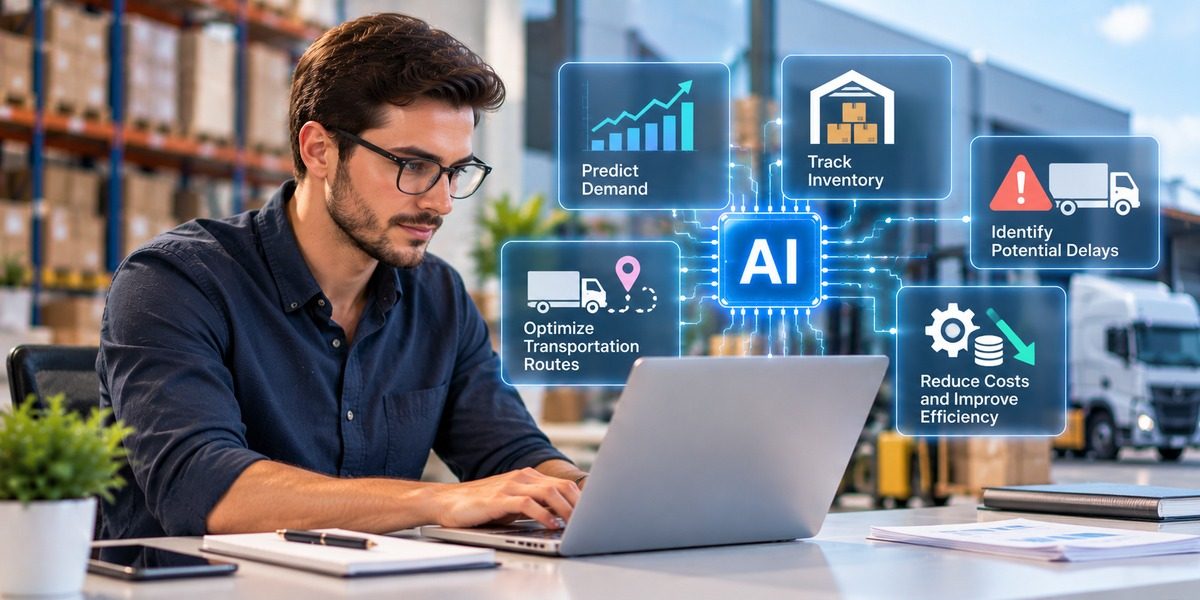
An AI supply chain analyst uses artificial intelligence and data analysis to help businesses move products and materials more efficiently from suppliers to customers. They work with AI tools that can predict demand, track inventory, identify potential delays, and optimize transportation routes. Their goal is to help companies reduce costs, improve efficiency, and ensure products are available when and where they are needed.
AI supply chain analysts work in industries such as retail, manufacturing, logistics, transportation, and e-commerce. They collaborate with supply chain managers, inventory planners, operations teams, data analysts, and technology specialists to improve decision-making and solve supply chain challenges. This career is a great fit for people who enjoy working with data, solving problems, and using technology to improve business operations.
What does an AI Supply Chain Analyst do?
Duties and Responsibilities
AI supply chain analysts have a variety of duties and responsibilities focused on using artificial intelligence to improve inventory management, forecasting, logistics, and overall supply chain performance.
- Analyze Supply Chain Data: Use AI tools to examine inventory levels, sales trends, supplier performance, and transportation data. These insights help businesses make better operational decisions.
- Forecast Demand: Develop and monitor AI models that predict future customer demand. Accurate forecasting helps companies maintain the right inventory levels and avoid shortages or excess stock.
- Optimize Inventory Management: Use AI-driven insights to ensure products are available when needed while minimizing storage costs. This helps improve efficiency throughout the supply chain.
- Identify Risks and Disruptions: Monitor supply chain activities for potential delays, shortages, or other disruptions. Early detection allows businesses to respond quickly and reduce operational impacts.
- Improve Logistics and Transportation: Analyze shipping routes, delivery schedules, and transportation costs using AI tools. This helps companies move products more efficiently and reduce expenses.
- Collaborate with Supply Chain Teams: Work closely with supply chain managers, procurement teams, logistics specialists, data analysts, and business leaders. Collaboration ensures AI solutions align with operational goals and improve overall performance.
Types of AI Supply Chain Analysts
AI supply chain analysts can specialize in different areas of the supply chain depending on the types of data they analyze and the business challenges they help solve.
- Demand Forecasting Analyst: Uses AI to predict future customer demand based on sales trends, market conditions, and historical data. Their forecasts help businesses plan inventory and production more accurately.
- Inventory Optimization Analyst: Focuses on maintaining the right inventory levels across warehouses and stores. They use AI tools to reduce shortages, prevent overstocking, and improve efficiency.
- Logistics and Transportation Analyst: Uses AI to optimize shipping routes, delivery schedules, and transportation costs. Their work helps products move through the supply chain more quickly and efficiently.
- Procurement and Supplier Analyst: Analyzes supplier performance, purchasing patterns, and sourcing risks using AI tools. They help businesses make better purchasing decisions and build more reliable supplier networks.
- Supply Chain Risk Analyst: Uses AI to identify potential disruptions such as supplier delays, transportation issues, or market changes. Their goal is to help organizations reduce risk and improve resilience.
- Supply Chain Analytics Specialist: Focuses on analyzing large volumes of operational data to identify trends and opportunities for improvement. Their insights support better decision-making across the entire supply chain.
AI supply chain analysts have distinct personalities. Think you might match up? Take the free career test to find out if AI supply chain analyst is one of your top career matches. Take the free test now Learn more about the career test
What is the workplace of an AI Supply Chain Analyst like?
The workplace of an AI supply chain analyst is usually found in retail companies, manufacturing firms, logistics providers, transportation companies, and e-commerce businesses. Many analysts work in office or remote environments where they use AI software, data dashboards, and analytics platforms to monitor inventory, shipments, and supply chain performance.
AI supply chain analysts work closely with supply chain managers, inventory planners, procurement teams, logistics specialists, warehouse managers, and data analysts. Collaboration is a major part of the role because supply chain decisions affect many different parts of a business. Regular meetings and communication help teams respond quickly to changing demand, supplier issues, or delivery delays.
The work is analytical, fast-paced, and focused on problem-solving. AI supply chain analysts spend much of their time reviewing data, identifying trends, improving forecasts, and finding ways to reduce costs and improve efficiency. Because global supply chains and AI technologies are constantly evolving, continuous learning and adapting to new tools and challenges are important parts of the job.
Frequently Asked Questions
Artificial Intelligence-Related Careers and Degrees
AI Careers
Technical & Engineering Roles
- AI Agent Developer
- AI Autonomous Systems Engineer
- AI Cloud Engineer
- Artificial Intelligence Engineer
- AI Infrastructure Engineer
- AI Integration Specialist
- AI Performance Engineer
- AI Platform Engineer
- AI Robotics Engineer
- AI Software Engineer
- AI Solutions Engineer
- AI Systems Engineer
- Computer Vision Engineer
- Edge AI Engineer
- Generative AI Engineer
- Machine Learning Engineer
- MLOps Engineer
- Multimodal AI Engineer
- Natural Language Processing (NLP) Engineer
- Synthetic Data Engineer
AI Product & Design Roles
- AI Accessibility Designer
- AI Creative Technologist
- AI Curriculum Designer
- AI Instructional Designer
- AI Interaction Designer
- AI Learning Experience Designer
- AI Personalization Engineer
- AI Product Designer
- AI Product Manager
- AI UX Designer
- AI Voice Interface Designer
- HAX (Human-AI Experience) Designer
AI Research & Data Roles
- AI Data Analyst
- AI Data Curator
- AI Data Scientist
- AI Evaluation Specialist
- AI Knowledge Engineer
- AI Prompt Scientist
- AI Research Analyst
- AI Research Scientist
AI Strategy, Management & Business Roles
- AI Business Analyst
- AI Change Manager
- AI Consultant
- AI Implementation Specialist
- AI Lifecycle Manager
- AI Product Evangelist
- AI Project Coordinator
- AI Strategist
- AI Workforce Transformation Specialist
AI Ethics, Policy & Governance Roles
- AI Bias Auditor
- AI Compliance Analyst
- AI Compliance Officer
- AI Data Privacy Specialist
- AI Ethics Specialist
- AI Explainability Specialist
- AI Governance Analyst
- AI Governance Specialist
- AI Policy Analyst
- AI Red Team Specialist
- AI Risk Manager
- AI Safety Researcher
- AI Security Specialist
- AI Trust & Safety Specialist
- Responsible AI Specialist
AI Content & Communication Roles
- AI Auditor
- AI Community Manager
- AI Content Writer
- AI Conversation Designer
- AI Literacy Specialist
- AI Localization Specialist
- AI Technical Writer
- AI Trainer
Generative & Creative AI Roles
Industry-Specific AI Roles
- AI Agriculture Specialist
- AI Cybersecurity Specialist
- AI Education Specialist
- AI Financial Specialist
- AI Gaming Specialist
- AI Healthcare Specialist
- AI Legal Specialist
- AI Manufacturing Specialist
- AI Marketing Specialist
- AI Retail Specialist
- AI Supply Chain Analyst
Degrees
AI Supply Chain Analysts are also known as:
Artificial Intelligence Supply Chain Analyst