
What is a Ceramic Engineer?
Ceramic engineers design, develop, test, and improve ceramic materials used in a wide range of products and industries. While ceramics include familiar items such as pottery and tiles, engineering ceramics are also used in advanced technologies because they are strong, heat-resistant, lightweight, and resistant to wear and corrosion. Ceramic engineers work with materials such as glass, porcelain, cement, advanced ceramics, and composites to create products for industries including aerospace, electronics, healthcare, automotive, construction, and energy.
This career is well suited to people who enjoy science, engineering, and solving technical problems. Ceramic engineers often work in research laboratories, manufacturing facilities, and product development teams, where they develop new materials, improve manufacturing processes, and ensure products meet quality and safety standards. People who are analytical, detail-oriented, creative, and interested in chemistry, physics, and materials science often excel in this field.
What does a Ceramic Engineer do?
Duties and Responsibilities
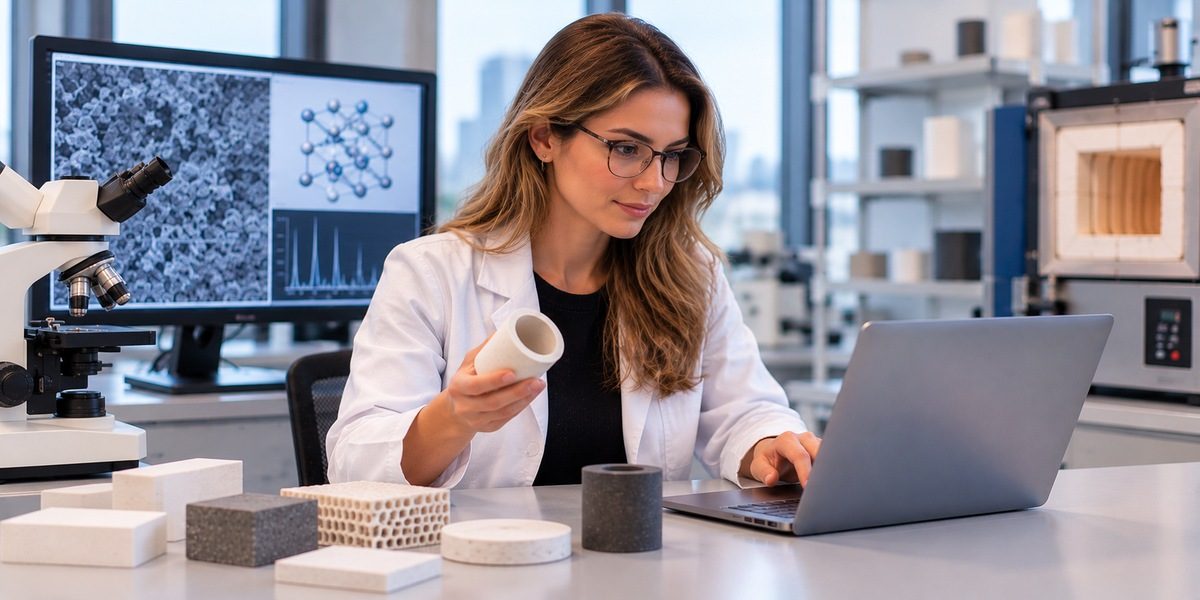
Ceramic engineers perform a variety of tasks to develop, test, and improve ceramic materials and products for use in many different industries. Their duties often include:
- Designing Ceramic Materials: Develop ceramic materials with specific properties such as strength, heat resistance, electrical insulation, or durability. Select the appropriate materials and manufacturing methods based on the product's intended use.
- Conducting Research and Testing: Perform laboratory experiments and material testing to evaluate the performance, quality, and reliability of ceramic products. Analyze test results to improve material properties and manufacturing processes.
- Developing Manufacturing Processes: Design and refine production methods for ceramic products to improve efficiency, reduce waste, and maintain consistent quality. Monitor manufacturing operations to ensure products meet specifications.
- Solving Technical Problems: Investigate issues related to material performance, product defects, or production challenges. Develop practical solutions to improve product reliability, safety, and manufacturing efficiency.
- Ensuring Quality and Safety: Establish quality control procedures and inspect finished products to ensure they meet industry standards and customer requirements. Verify that manufacturing processes comply with safety and environmental regulations.
- Collaborating with Other Professionals: Work with materials scientists, mechanical engineers, chemists, manufacturing teams, and product designers to develop new products and improve existing ones. Provide technical expertise throughout the design, testing, and production process.
Types of Ceramic Engineers
Ceramic engineering offers several areas of specialization, allowing professionals to focus on developing ceramic materials and products for different industries and applications. Common types of ceramic engineers include:
- Advanced Ceramics Engineer: Develops high-performance ceramic materials used in aerospace, electronics, defence, and industrial applications. Focuses on creating materials with exceptional strength, heat resistance, and durability.
- Bioceramics Engineer: Designs ceramic materials used in healthcare, such as dental implants, artificial joints, bone substitutes, and medical devices. Ensures materials are safe, durable, and compatible with the human body.
- Glass Engineer: Develops and improves glass products used in construction, electronics, automotive manufacturing, telecommunications, and consumer goods. Works with specialty glass, optical glass, and glass manufacturing processes.
- Refractories Engineer: Designs heat-resistant ceramic materials used to line furnaces, kilns, boilers, and industrial equipment. Helps industries such as steel, cement, and glass manufacturing operate safely at extremely high temperatures.
- Cement and Construction Materials Engineer: Develops and tests cement, concrete, and other construction materials to improve strength, durability, and environmental performance. Works on projects ranging from buildings and bridges to roads and infrastructure.
- Manufacturing Process Engineer: Focuses on improving the production of ceramic materials and products by optimizing manufacturing processes, increasing efficiency, reducing waste, and maintaining product quality.
Ceramic engineers have distinct personalities. Think you might match up? Take the free career test to find out if ceramic engineer is one of your top career matches. Take the free test now Learn more about the career test
What is the workplace of a Ceramic Engineer like?
Ceramic engineers work in a variety of settings depending on the industry and the type of materials they develop. Many work in manufacturing plants, where they oversee the production of ceramic products, monitor quality, and improve manufacturing processes. Others work in research laboratories, testing new materials and developing advanced ceramics for industries such as aerospace, healthcare, electronics, and energy.
The work environment is often a combination of office, laboratory, and production floor settings. In laboratories, ceramic engineers conduct experiments, analyze material properties, and use specialized equipment to test strength, durability, heat resistance, and other characteristics. On the manufacturing floor, they may inspect equipment, solve production problems, and work closely with technicians to ensure products meet quality and safety standards.
Ceramic engineers usually work as part of a team that includes materials scientists, chemists, mechanical engineers, production managers, and quality control specialists. Most work full-time during regular business hours, although additional hours may be required when overseeing production, conducting important tests, or meeting project deadlines. The career offers opportunities to contribute to products that are used in everyday life as well as advanced technologies, from medical implants and electronics to aircraft components and renewable energy systems.
Frequently Asked Questions
Engineering-Related Careers and Degrees
Careers
Agriculture & Environmental
- Agricultural Engineer
- Coastal Engineer
- Environmental Engineer
- Geothermal Engineer
- Hydrogen Engineer
- Nuclear Engineer
- Renewable Energy Engineer
- Solar EngineerEngineer
- Water Engineer
- Water Resources Engineer
- Wind Energy Engineer
Architecture & Construction
- Architectural Engineer
- Civil Engineer
- Civil Engineering Technician
- Construction Engineer
- Geotechnical Engineer
- Structural Engineer
- Urban Planning Engineer
Audio, Video & Media
- Audio Engineer
- Broadcast Engineer
- Digital Design Engineer
- Digital Remastering Engineer
- Game Audio Engineer
- Live Sound Engineer
- Mastering Engineer
- Mixing Engineer
- Recording Engineer
Automotive & Electric Vehicles
Aerospace & Aviation
Biomedical & Biochemical
Chemical & Materials
- Ceramic Engineer
- Chemical Engineer
- Fuel Cell Engineer
- Fuel Cell Technician
- Glass Engineer
- Materials Engineer
- Mining and Geological Engineer
- Nanotechnology Engineer
- Nanosystems Engineer
- Paper Science Engineer
- Petroleum Engineer
- Plastics Engineer
- Polymer Engineer
- Pulp and Paper Engineer
Computer, AI & Data
- Artificial Intelligence Engineer
- Big Data Engineer
- Cloud Engineer
- Computer Engineer
- Computer Hardware Engineer
- Computer Vision Engineer
- Data Engineer
- Embedded Systems Engineer
- Machine Learning Engineer
- Natural Language Processing Engineer
- Security Engineer
- Software Engineer
- Software Quality Assurance Engineer
- Systems Engineer
Electrical & Electronics
- Communications Engineer
- Control Engineer
- Electrical Engineer
- Electrical Engineering Technician
- Electromechanical Engineer
- Electronics Engineer
- Power Electronics Engineer
- Power Engineer
- RF Engineer
- Signal Processing Engineer
- Smart Grid Engineer
- Telecommunications Engineer
Industrial & Mechanical
- Automation Engineer
- Industrial Engineer
- Industrial Engineering Technician
- Manufacturing Engineer
- Mechanical Engineer
- Mechanical Engineering Technician
- Mechatronics Engineer
- Product Safety Engineer
- Robotics Engineer
- Stationary Engineer
Marine & Naval
Optics & Photonics
Rail & Transportation
Miscellaneous / General
Degrees
- Engineering
- Aerospace Engineering
- Agricultural Engineering
- Architectural Engineering
- Biochemical Engineering
- Biological Systems Engineering
- Biomedical Engineering
- Chemical Engineering
- Civil Engineering
- Computer Engineering
- Computer Hardware Engineering
- Computer Software Engineering
- Construction Engineering
- Electrical Engineering
- Electromechanical Engineering
- Engineering Mechanics
- Engineering Physics
- Engineering Science
- Environmental Engineering
- Geological Engineering
- Industrial Engineering
- Manufacturing Engineering
- Materials Science and Engineering
- Mechanical Engineering
- Naval Engineering
- Nuclear Engineering
- Ocean Engineering
- Optical Engineering
- Paper Science and Engineering
- Petroleum Engineering
- Plastics Engineering
- Pulp and Paper Engineering
- Robotics Engineering
- Sound Engineering
- Structural Engineering
- Surveying Engineering
- Systems Engineering
- Telecommunications Engineering