What is a Volcanologist?
A volcanologist is a geologist who focuses on studying volcanoes and their activity. They examine how volcanoes form, their internal structure, and the patterns of their eruptions. Using tools like satellite imagery, seismographs, and gas measurements, volcanologists analyze data to understand how volcanoes behave and to predict possible eruptions. Their work helps identify hazards such as lava flows, ash clouds, pyroclastic flows, mudslides, and volcanic gases, and they develop strategies to reduce risks for nearby communities.
In addition to safety work, volcanologists study how volcanoes affect the environment, including their role in climate and the formation of natural resources. Fieldwork is a key part of their job, often involving trips to remote volcanoes to collect samples and monitor activity firsthand. They frequently collaborate with other experts, such as geophysicists, meteorologists, and geochemists, to gain a complete understanding of volcanic processes and the complex ways these natural events shape our planet.
What does a Volcanologist do?
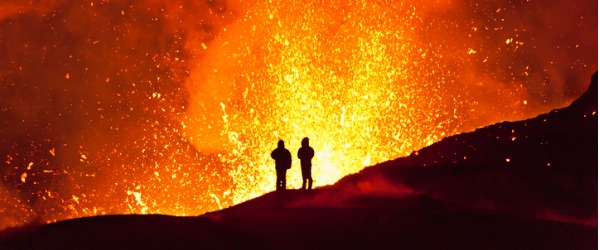
The work of volcanologists is critical to the safety and well-being of communities living near active or potentially active volcanoes, and their research can contribute to a better understanding of the Earth's geological processes.
Duties and Responsibilities
Here are some of the key duties and responsibilities of volcanologists:
- Monitoring Volcanic Activity: Volcanologists monitor volcanic activity using a range of tools and techniques, including seismometers, gas sensors, and remote sensing equipment. They collect data on seismic activity, gas emissions, and ground deformation to detect changes in the behavior of a volcano.
- Analyzing Data: Volcanologists analyze data collected from monitoring equipment to determine the status of a volcano and to predict the likelihood of an eruption. They use computer modeling and other analytical techniques to interpret data and to identify patterns and trends.
- Conducting Fieldwork: Volcanologists often conduct fieldwork to collect data, install monitoring equipment, and perform visual observations of volcanic activity. They may travel to remote locations and work in challenging conditions to gather data and monitor volcanic activity.
- Collaborating With Other Scientists: Volcanologists collaborate with other scientists, including geologists, seismologists, and atmospheric scientists, to share data and insights on volcanic activity. They work together to develop a better understanding of volcanic processes and to improve the accuracy of hazard assessments.
- Providing Hazard Assessments: Volcanologists use their data analysis and modeling skills to provide hazard assessments and warnings to government officials, emergency responders, and the public. They provide recommendations on evacuation plans and other measures to reduce the risk of harm to people and property.
- Conducting Research: Volcanologists conduct research to better understand the processes that drive volcanic activity and to improve hazard assessments. They publish their findings in scientific journals and share their research with colleagues in the field.
- Educating the Public: Volcanologists educate the public about the risks associated with volcanic activity and how to prepare for volcanic eruptions. They work with local communities to develop evacuation plans and to promote public awareness of the hazards posed by volcanoes.
Types of Volcanologists
Within the field of volcanology, there are various types of specialists, each focusing on specific aspects of volcanic activity and related phenomena. Here are some types of volcanologists:
- Volcanic Geologists: Volcanic geologists specialize in the geological aspects of volcanoes, studying the formation, structure, and composition of volcanic rocks, deposits, and landforms.
- Volcanic Geochemists: Volcanic geochemists focus on the chemical composition of volcanic rocks and gases. They analyze samples to understand magma composition, eruption processes, and the geochemical evolution of volcanic systems.
- Volcanic Seismologists: Volcanic seismologists study the seismic activity associated with volcanoes. They analyze earthquake patterns, tremors, and ground vibrations to monitor volcanic unrest and predict eruptions.
- Volcanic Geophysicists: Volcanic geophysicists use various geophysical techniques, such as gravity measurements, magnetic surveys, and ground deformation studies, to investigate the subsurface structure and dynamics of volcanic systems.
- Remote Sensing Technicians: Remote sensing technicians utilize satellite imagery, aerial photography, and other remote sensing technologies to monitor volcanic activity from a distance. This includes tracking changes in surface temperature, gas emissions, and ash plumes.
- Volcanic Hazards Scientists: Volcanic hazards scientists assess the potential risks and hazards associated with volcanic activity. They study lava flows, pyroclastic flows, ashfall, and other volcanic phenomena to mitigate risks to human populations and infrastructure.
- Volcanic Petrologists: Volcanic petrologists examine the mineralogy and petrology of volcanic rocks to understand the origin and evolution of magma. They contribute to the classification of volcanic rocks and the interpretation of volcanic processes.
- Volcanic Remote Operated Vehicle (ROV) Specialists: Volcanic ROV specialists use remotely operated vehicles to explore and study underwater volcanic activity. They investigate submarine volcanoes and hydrothermal vent systems in oceanic environments.
- Volcanic Gas Geochemists: Volcanic gas geochemists focus on the study of volcanic gases emitted during eruptions. They analyze the chemical composition of gases to gain insights into volcanic processes and assess potential hazards.
- Volcanic Ecologists: Volcanic ecologists study the impact of volcanic activity on ecosystems, including the recovery of plant and animal life after eruptions. They assess the long-term ecological effects of volcanic events.
What is the workplace of a Volcanologist like?
The workplace of a volcanologist can be very exciting and varied. Much of their work happens outdoors, often near active or dormant volcanoes. This means they might hike up rugged mountains, climb volcanic slopes, or even camp near a volcano to observe it closely. They use tools like gas sensors, seismometers, and GPS equipment to measure activity, and they often take rock, soil, and ash samples to study back in the lab. Fieldwork can be challenging because volcanoes are unpredictable, weather can be harsh, and the terrain can be dangerous, but it’s also one of the most rewarding parts of the job.
Volcanologists also spend a lot of time in laboratories and offices. Here, they analyze the samples they collected and study data from their instruments and satellites. They use computers to model eruptions, track patterns in volcanic activity, and make predictions about future events. This part of the job requires careful observation, attention to detail, and problem-solving skills. Even though it’s less adventurous than fieldwork, it’s just as important for keeping communities safe and advancing scientific understanding.
Collaboration is another big part of a volcanologist’s workplace. They often work with other scientists, emergency management teams, and government agencies. They may give talks to local communities, write reports, or help plan evacuation routes for areas near volcanoes. So, a volcanologist’s workplace isn’t just one location. It’s a mix of remote volcanoes, labs, offices, and even schools or community centers. This variety makes the job interesting and allows them to combine hands-on exploration with research and public safety.
Frequently Asked Questions
Science-Related Careers and Degrees
Careers
- Agronomist
- Animal Scientist
- Anthropologist
- Archaeologist
- Astronaut
- Astronomer
- Astrophysicist
- Atmospheric Scientist
- Behavioral Scientist
- Biochemist
- Bioinformatics Scientist
- Biologist
- Biomedical Scientist
- Biophysicist
- Biostatistician
- Biotechnician
- Biotechnologist
- Botanist
- Cellular Biologist
- Chemical Technician
- Chemist
- Climate Change Analyst
- Clinical Psychopharmacologist
- Comparative Anatomist
- Computational Biologist
- Conservation Biologist
- Conservation Scientist
- Criminologist
- Cytogenetic Technologist
- Cytotechnologist
- Dairy Scientist
- Developmental Biologist
- Ecologist
- Ecology Biologist
- Ecotoxicologist
- Engineering Physicist
- Entomologist
- Epidemiologist
- Ethologist
- Evolutionary Biologist
- Food Science Technologist
- Food Scientist
- Forensic Pathologist
- Forensic Science Technician
- Forensic Scientist
- Forester
- Geneticist
- Geodesist
- Geographer
- Geologist
- Geospatial Information Scientist
- Herpetologist
- Horticulturist
- Hydrologist
- Ichthyologist
- Immunologist
- Industrial Ecologist
- Mammalogist
- Marine Biogeochemist
- Marine Biologist
- Marine Conservationist
- Marine Ecologist
- Marine Fisheries Biologist
- Marine Mammalogist
- Marine Microbiologist
- Materials Scientist
- Meteorologist
- Microbiologist
- Molecular Biologist
- Natural Sciences Manager
- Neurobiologist
- Neuropsychologist
- Neuroscientist
- Oceanographer
- Ornithologist
- Paleontologist
- Particle Physicist
- Pathologist
- Pharmaceutical Scientist
- Pharmacologist
- Pharmacist
- Physicist
- Physiologist
- Political Scientist
- Poultry Scientist
- Scientist
- Social Scientist
- Sociologist
- Soil and Plant Scientist
- Soil and Water Conservationist
- Systems Biologist
- Toxicologist
- Veterinary Pathologist
- Virologist
- Volcanologist
- Wildlife Biologist
- Wildlife Ecologist
- Zoo Endocrinologist
- Zoologist
Degrees
- Agronomy
- Animal Sciences
- Biochemistry
- Biology
- Biomedical Sciences
- Biophysics
- Botany
- Cellular Biology
- Chemistry
- Criminology
- Dairy Science
- Environmental Science
- Food Science
- Forestry
- Genetics
- Horticulture
- Immunology
- Microbiology
- Molecular Biology
- Pathology
- Physics
- Political Science
- Poultry Science
- Social Science
- Sociology
- Soil Science
- Zoology
Volcanologists are also known as:
Volcano Scientist
Volcano Expert
Volcanism Specialist